
Reducing how much your household depends on the utility grid does not require solar panels on the roof or a battery wall in the garage, though those are certainly options for people who want to go further. Most families can make meaningful progress with a handful of practical, affordable changes.
Lower grid reliance means lower monthly bills, more resilience during outages, and for many people, simply the satisfaction of using resources more thoughtfully. It is also one of the most natural next steps once a household has already started growing food or preserving a harvest.
This guide walks through the most practical, achievable ways to cut your electricity and water dependence, organized from the easiest first steps to the more involved projects worth considering down the road.
Start With Electricity Use You Can See
The average home wastes a surprising amount of electricity on devices that are technically off but still drawing power, often called phantom load. Chargers, televisions, and game consoles left plugged in can add up to a meaningful chunk of a monthly bill.
A simple power strip with a physical switch lets you cut power to an entire cluster of devices at once, which is far more realistic than unplugging each item individually every night.
LED bulbs use roughly 75 percent less energy than incandescent bulbs and last many times longer. Replacing your most-used fixtures first, rather than the whole house at once, gets you most of the savings for the least upfront cost.
Rethink Heating and Cooling
Heating and cooling typically account for the largest single share of a home’s energy use, which also means it is where the biggest reductions are available.
A programmable or smart thermostat that adjusts temperature automatically while you sleep or are away from home can meaningfully cut energy use without you having to think about it daily.
Simple weatherproofing, sealing gaps around windows and doors with caulk or weatherstripping, often pays for itself within a single season by keeping conditioned air where it belongs.
Ceiling fans let you feel comfortable at a slightly higher thermostat setting in summer and a slightly lower one in winter, since moving air changes how warm or cool a room feels well beyond what the thermometer actually reads.
Cut Water Use Without Feeling Deprived
Low-flow showerheads and faucet aerators reduce water use substantially without a noticeable drop in performance, and most are inexpensive enough to pay for themselves within weeks.
Fixing leaks promptly matters more than most people realize. A single dripping faucet can waste thousands of gallons a year, quietly adding to both your water bill and your home’s overall grid dependence if that water was heated.
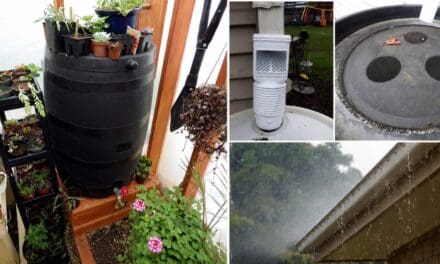
A rain barrel connected to a downspout is one of the most effective ways to reduce outdoor water use, since garden and lawn watering often represents a large share of total household water consumption during the growing season.
Grow and Preserve Some of Your Own Food
Every vegetable you grow yourself is one less item that traveled through a long, energy-intensive supply chain before reaching your plate. Even a modest raised bed garden makes a real dent in a household’s grocery bill and its indirect energy footprint.
Preserving a harvest through canning, freezing, or fermenting extends the value of that garden well beyond the growing season, reducing how often you need to rely on store-bought, out-of-season produce.
This is often where households first start thinking seriously about broader self-sufficiency and homesteading, since growing and preserving food naturally leads to questions about water, energy, and how much of daily life can be handled at home rather than bought in.
Improve Your Home’s Envelope
A home’s envelope is everything separating conditioned indoor air from the outdoors: walls, roof, windows, and doors. A leaky envelope forces your heating and cooling system to work harder than it should, no matter how efficient the equipment itself is.
Attic insulation is one of the highest-return upgrades available, since heat rises and an under-insulated attic can account for a large share of total heat loss in winter. Many older homes were insulated to standards well below what is recommended today.
Draft-proofing around outlets, baseboards, and attic hatches often gets overlooked in favor of doors and windows, yet these smaller gaps add up to a meaningful amount of air leakage across an entire house.
A simple incense stick or a lit candle held near window and door frames on a windy day will show you exactly where drafts are getting in, since the flame or smoke will visibly flicker at any real air leak.
Consider a Backup Power Source
You do not need a whole-home solar and battery system to gain real independence from the grid. A portable solar generator or a small battery power station can keep essential items like a refrigerator, phone chargers, and a few lights running during a shorter outage.
For households ready to go further, a grid-tied solar system with battery backup provides both day-to-day savings and resilience during longer outages, though the upfront investment and payback period deserve careful research specific to your local utility rates and available incentives.
Even a simple setup, such as a couple of portable solar panels charging a battery bank for essential devices, meaningfully reduces how dependent your household is on the grid staying up during a storm or other disruption.
Choose Efficient Appliances Over Time
You do not need to replace working appliances early just to save energy, since the environmental and financial cost of manufacturing a new appliance often outweighs the savings from retiring a functional one too soon.
When an appliance does eventually need replacing, look for the highest efficiency rating available within your budget. A refrigerator, which runs continuously every day of the year, offers some of the largest cumulative savings of any single appliance upgrade in a home.
Water heaters are another major energy user worth paying attention to at replacement time. A tankless or heat pump water heater uses meaningfully less energy than a standard tank model, though the upfront cost is higher and payback time varies by household hot water use.
Small kitchen appliances like slow cookers, pressure cookers, and toaster ovens use a fraction of the energy of a full-size oven for many everyday meals, and leaning on them more often for smaller meals is an easy, low-effort habit shift.
Small Habits That Add Up
● Running dishwashers and washing machines only with full loads
● Air-drying laundry when weather and space allow, instead of always using a dryer
● Cooking multiple meals at once when the oven is already on, to get more use from the same energy
● Using a clothesline or drying rack for at least part of your laundry each week
● Turning off lights in unoccupied rooms as a simple, consistent habit rather than an occasional effort
Building Toward Long-Term Resilience
Reducing grid reliance works best as a gradual process rather than an overnight overhaul. Start with the free and low-cost habits, move on to weatherproofing and efficient fixtures, and only take on larger projects like solar once the smaller wins are already in place.
Each step compounds. A well-insulated home uses less energy for a smaller backup power system to cover, and a productive garden reduces exactly the kind of grocery spending that a tighter household budget needs relief from.
Final Thoughts
You do not need to go off-grid entirely to benefit from using less of it. Small, consistent changes to how your household uses electricity and water add up to real savings and real resilience over time.
Start with the changes that cost little or nothing, build toward the bigger projects as your budget allows, and let each improvement make the next one a little easier to justify.